Wednesday, March 15, 2023
Black-necked Stilts
Since I'm not doing very well with blogging, I thought I would share my blog posts for Travis Audubon here. Each month I look at one bird found in Texas but, of course, many migrate or spend time in other parts of the country. I love watching Black-necked Stilts and hope you do, too.
https://travisaudubon.org/uncategorized/bird-of-the-week-black-necked-stilt

Sunday, November 13, 2022
How to Find a Bird

Lushly illustrated by Diana Sudyka, the picture book is full of details and lots of birds, each labeled. One double-page spread even includes extinct birds like the Dodo and the Ivory-billed woodpecker. The final two pages offer advice on how to be a bird watcher. Great to read aloud to a young child or give as a gift.

Sunday, October 16, 2022
Bird of the Week: Whooping Cranes

I'll post information here after the posts publish for Audubon.
Saturday, June 25, 2022

All About Birds: Texas and Oklahoma opens with a fold-out index of birds by categories but the table of contents includes a break down by species within each category. Early chapters focus on beginning birding, attracting birds to your yard, and getting involved with birding. Especially appreciated is the section on types of food and feeders. A guide to common species found in Texas and Oklahoma follows. Information is drawn from Cornell’s AllAboutBirds.com. As noted in the welcome, each profile includes a map of the usual territory and full-color photos to help with plumage variations. The profile section starts with general tips for identifying birds by various traits and understanding field marks. An end of the book index helps locate specific information. Most birders probably wouldn’t carry this big of a book into the field, but it is great for learning about birds you are looking for at home or in the “wild.” Definitely worth adding to your bird collection. Other titles in the series cover California and four regions of the country.
Saturday, June 11, 2022
Shorebird ID Guide
Cornell Lab has some great resources. I wanted to share this Shorebirds Identification Chart. Two pages!
"From plovers to peeps and beyond, become familiar with the diversity of shorebirds with this free downloadable guide! Paying attention to shape, size, and behavior goes a long way to identifying shorebirds. This helpful shorebird ID guide has full-color photos, ID tips, and a size reference chart for use at home or out in the field. You can download, print out, and bring this guide with you!"
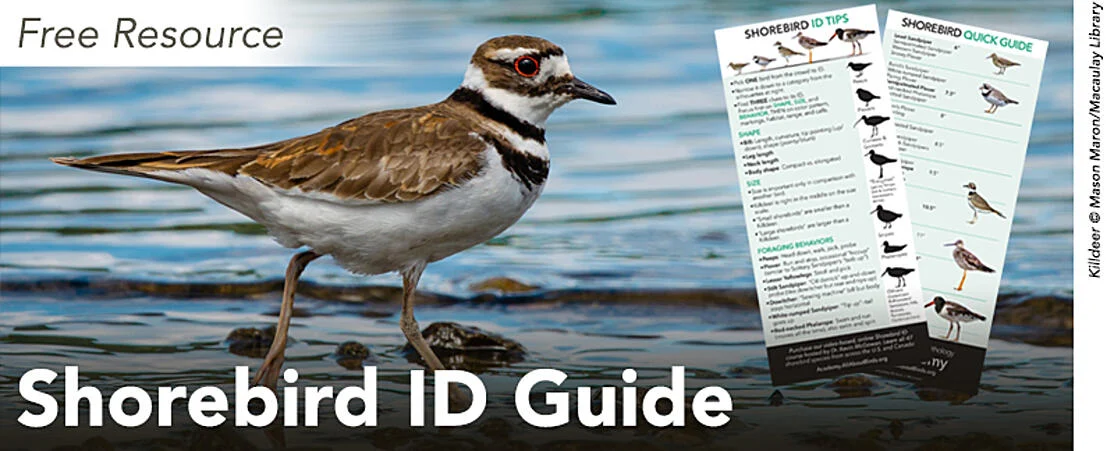
Shorebirds Identification Chart
Friday, August 20, 2021
Sharing Information
It's been almost exactly a year since my last blog post. Blame it on lock-down laziness? I wasn't doing much birding during the time of Covid and I also was in the hospital and recovering from open heart surgery (I'm fine now.) BUT, I was taking a number of online classes about birds (and cooking, but not cooking birds--I'm vegetarian).
"Once you discover something it's important to share that information." This advice comes from the scientists at the World Center for Birds of Prey in Boise, ID. I discovered the Center while taking a kid's course through Varsity Tutors. Most of their classes are free or available for a very low cost. And while they say that this class was for children, it was very enlightening for adults also, so take a class with a kid or by yourself. Varsity Tutors also offers classes on dinosaurs, ancestors of today's birds, and many other topics.
During the one hour class, Saving Raptors, Curtis Evans shared information and introduced us to some of the birds of prey that are currently living at the Center. In addition to rehabilitation, the Center raises endangered birds to be released back into the wild. Many birds at the Center are used in educational situations if they can't be released. The Center also works around the world to help prevent habitat loss and extinction.
 |
| Burrowing owls (Photo by The Peregrine Fund) |
One thing I've learned as a birder is that we are always learning new things about birds! Owls borrow a nest someone else, like a hawk or eagle, has made. Or smaller owls go into cavities in trees or barns. Vultures lay eggs on a scrape on a cliff or in a cavity. Hawks and eagles make nests. Falcons may nest on the edge of buildings. (See Tower Girl at the University of Texas at Austin) Eagles build very large nests adding to the building every year. Nests are not deep but the birds continue adding a clean layer to the nest.
 |
| Milky eagle owl (Photo by the Peregrine Fund) |
One of the most amazing raptors shown was the Milky Eagle Owl, Africa’s largest owl, commonly known as the Giant Eagle Owl, its correct name is the Verreaux's eagle-owl. The one at the World Center is an owl that hatched at the Atlanta Zoo, where one can be seen also. Hand raised, the owlet then went to Idaho where it remains. So now I have to plan a visit!
Hopefully I can get back on track now that there is some return to normalcy. Wearing a mask, I am going to lectures, getting out to bird, and travelling some. And, of course, always learning.
Monday, August 17, 2020
The Thing With Feathers: The Surprising Lives of Birds and What They Reveal About Being Human
 |
Each chapter focuses on
a single species, and it should be noted, those included are often not the
“rock stars of ornithology.” The chapters are divided into three sections: Body,
Mind, Spirit. Strycker focuses on experiments and studies that support his
ideas that “[b]ird behavior offers
a mirror in which we can reflect on human behavior.”
He explores how pigeons learn to find their way home and the navigational skills of other species and why bower birds decorate their nests and appreciate their own version of art. Magpies are able to recognize themselves in mirrors and nutcrackers have amazing memories and can recall literally hundreds of locations where they have stored seeds. Especially interesting is the examination of pecking order in chickens. Vultures can distinguish taste, preferring to eat the carcasses of herbivores rather than carnivores. Without anthropomorphizing, Stryker explains these behaviors and frequently connects it to our world and helps us learn what it means to be human.
Each chapter includes a
drawing of the bird being discussed. End Notes explain the sources for his research
and describes themes that are based on Strycker’s own interpretations from his
field experiences. Each note offers additional readings and films for those who
want to further explore the described behaviors.
The book’s title comes from an Emily Dickinson poem (“Hope” is the thing with feathers) and Strycker’s writing is equally poetic and passionate. The chapters are easy to dip into and encourages readers to reflect on our own behaviors. Note that Dickinson’s poem has served as inspiration for several books with the same, or almost the same, title so be sure to check the author.
 |
| Black vulture (photo by Jeanette Larson) |
Monday, August 10, 2020
7 Pleasures of Birding
Caldecott Award-winning illustrator, Matthew Cordell (Wolf in the Snow) was inspired by a series of comment mades in a documentary called "Birders: The Central Park Effect" to draw the 7 pleasures of birding. He graciously gave me permission to share his art here. I'm posting without additional comment as Cordell and Chris Cooper, who came up with the list, express the joys of birding better than I possibly could.


All illustrations are copyright Matthew Cordell and are used with permission.
Tuesday, May 26, 2020
Numenia and the Hurricane

I’ll start by saying this is a book I would have loved to
have written. We were living in Rockport, TX during Hurricane Harvey. While my
family and pets evacuated, many birds could not, and I learned how hard it was
for birds to survive a storm. When we returned to the devastated area, it was heartbreaking
to see the avian carnage. Pelicans had been slammed against the jetties and
seawalls, where their carcasses decayed. Many of the migratory birds left but native
birds didn't know to go and died. Thankfully, hummingbirds had not started their fall migration and
were fine, although people had to step in to feed them as most plants were
defoliated. For three months we didn’t see even a grackle or a dove. But slowly,
the birds returned. Numenia and the Hurricane is a somewhat different
hurricane story and one with a happier ending.

Inspired by the true story of Hope, a whimbrel being tracked
by scientists, Halliday tells the harrowing tale of a lone whimbrel, separated from
her sisters during their southward migration from the Arctic. Lyrical lines of
text help us to feel for the poor bird as she is tossed and turned, battered by the
strong winds. Readers learn that Numenia preservers for 27 hours, alone, until finally, somehow,
with good natural instincts but plenty of wrong turns, she makes it to the US
Virgin Islands, tired and hungry, but safe with her sisters.
 |
| Hope with her tracking device. Photo Credit: Barry Truitt. |
As explained in the end notes, Numeria’s story is based on a bird named Hope, caught in Tropical Storm Gert and blown way off course in 2011. Hope was tracked by researchers for several years, allowing them to marvel at the whimbrel’s stamina and fortitude during many courageous migration journeys. Like Numeria’s story, her journey was amazing but one that many birds face each year during their journey between winter and summer habitats. The Whimbrel’s range is rather limited, but they travel each year between Canada and the Eastern and Southern US coasts, as well as into the Caribbean.
 |
Click on the tab for BOOKS ABOUT BIRDS for a list of all books mentioned in the blog posts.
FTC Notice: The author provided me with an electronic copy of the book to review.
Wednesday, May 20, 2020
Birdwatching in the Time of Corona
Trips are limited but outdoor activities are encouraged with, of course, proper physical distancing. Birdwatching has become a favored outing as it can be managed in small groups or alone. You can even birdwatch in your backyard or neighborhood.
Bird Watcher's Digest offers several Bird Bingo! cards for different regions of the county. Spring migration is still underway so most of us should have no problem getting a straight-line BINGO! Who's up for the challenge? (Download your region if you are not in Texas.)

Bird Watcher's Digest offers several Bird Bingo! cards for different regions of the county. Spring migration is still underway so most of us should have no problem getting a straight-line BINGO! Who's up for the challenge? (Download your region if you are not in Texas.)

Friday, May 15, 2020
BirdNote: Chirps, Quirks, and Stories of 100 Birds from the Popular Public Radio Show
 In 2004 Seattle Audubon’s team
began writing “compelling stories about the intriguing ways of birds.” These short,
one-two minute pieces, were recorded for local public radio. In 2006, the
program began to expand and is now heard on over 200 public radio stations. In
Austin, it can be heard as part of some Living on Earth segments on KUTX-90.5
FM. New and older segments can also be heard on-line at https://www.birdnote.org/shows/.
In 2004 Seattle Audubon’s team
began writing “compelling stories about the intriguing ways of birds.” These short,
one-two minute pieces, were recorded for local public radio. In 2006, the
program began to expand and is now heard on over 200 public radio stations. In
Austin, it can be heard as part of some Living on Earth segments on KUTX-90.5
FM. New and older segments can also be heard on-line at https://www.birdnote.org/shows/.
The book, BirdNote, edited by Ellen Blackstone with illustrations by Emily Poole, is a
compilation of 100 of the best stories from the radio show. Usually covering a
single page, with an illustration of the bird being discussed on the facing
page, each brief piece features the habits, quirks, songs, biology, and idiosyncrasies
of a bird. Articles include: Is anting an avian spa treatment? How does a finch’s
beak help it eat sunflower seeds? Why do some gulls have a red dot on their bills?
Did you know that Red-winged blackbirds have a harem? The bright red “epaulets”
warn other males to stay away from his many female companions. Roadrunners
sound like a lonely puppy. And Barn swallows are natural pest control. The
vignettes are informative, charming, poignant, and often humorous.
 The short pieces make it easy
to dip in and sample entries, but the index also allows readers to look up
specific birds. This compilation, published in 2018, focuses a lot on birds of
the Pacific Northwest, understandable given the origins of the program. More
recent programs feature birds from all over North America, and even some
worldwide birds. A feature from the program that is not able to be replicated
in the book are the sounds and songs included in most episodes. These come from
BirdNote’s partnership with Cornell Lab of Ornithology. On the other hand, the
illustrations by Emily Poole are, of course, not seen with aural pieces and will be of special interest to artists and illustrators. Each segment is
vetted by experts and the readers are professional narrators, storytellers, and
DJs. Readers who are also listeners may hear these voices while reading an
episode.
The short pieces make it easy
to dip in and sample entries, but the index also allows readers to look up
specific birds. This compilation, published in 2018, focuses a lot on birds of
the Pacific Northwest, understandable given the origins of the program. More
recent programs feature birds from all over North America, and even some
worldwide birds. A feature from the program that is not able to be replicated
in the book are the sounds and songs included in most episodes. These come from
BirdNote’s partnership with Cornell Lab of Ornithology. On the other hand, the
illustrations by Emily Poole are, of course, not seen with aural pieces and will be of special interest to artists and illustrators. Each segment is
vetted by experts and the readers are professional narrators, storytellers, and
DJs. Readers who are also listeners may hear these voices while reading an
episode.
Get a copy for yourself and as
a gift for a birding friend.
Note: This post was originally written for Travis Audubon's blog, Smoke Signals.
FTC Notice: I purchased a copy of this book for review.
Friday, April 17, 2020
Bird Cams
Bird cams are fascinating and viewers can get caught up in the drama of watching birds in their native habitats or housing. With the Covid-19 virus keeping us physically distant from each other, in most jurisdictions you can still take bird walks. But if you can't, try bird cams. You get a real "bird's eye" view (sorry) of nests, feeders, and other boxes.
Click on the link to visit each bird camera. Most are live so, of course, the bird may be away from the location. Many sites do include recorded video to enjoy if the birds are not there or it is too dark to see them. I'll add more as I find them, and please let me know if any disappear (some are hosted by businesses or individuals). Watching bird cams is very soothing although there can sometimes be drama.
Note: These are not in any particular order.
Texas Hill Country Birds live feed from Spicewood, TX.
Purple Martin Nest Cam the Purple Martin Conservation Association shows baby martins!
Owl Cam from Cornell Lab Bird Cams sponsored byWild Birds Unlimited. Watch a Barred Owl
West Texas Feeders from West Texas Avian Research sponsored by Perky Pets. Watch Hummingbirds and other birds at feeders.
Sapsucker Woods Pond Cam hosted by Cornell Lab. Watch ducks, herons, and other water birds and waders.
Northern Royal Albatross hosted by New Zealand Dept. of Conservation. Many of us will never get to see these beautiful birds in real life.
Panama Fruit Feeder Cam at Canopy Lodge sponsored by Cornell Lab of Ornithology, the Canopy Family, and explore.org., features various fruit eating birds in Panama.
Eagle Cam hosted by explore.org. This cam focuses on a bald eagle nest is located near a trout hatchery in Decorah, Iowa
Osprey Nest sponsored by Hog Island Audubon Camp and explore.org. A pair of Osprey have been returning to this nest for years.
Cornell Feeder Watch Cam allows us to view common birds like doves and grackles feeding but also other birds passing through Sapsucker Woods.
Peregrine Falcons is focused on a nest in Rome, Italy.
Cornell Feeder Watch Cam allows us to view common birds like doves and grackles feeding but also other birds passing through Sapsucker Woods.
Peregrine Falcons is focused on a nest in Rome, Italy.
Tuesday, March 10, 2020
The Nest That Wren Built

 |
| Carolina wren nestlings (photo by Randi Sonenshine) |
 |
| Inside page |
This is the bark, snippets of twine,
spidery rootlets, and needles of pine
that shape the nest that Wren built.
 |
| Nest in a cardboard box in the authors garage (photo by Randi Sonenshine) |
 |
| Photo: By Dan Pancamo - Flickr: Carolina Wren |
FTC Disclosure: I received a complimentary review copy from the publisher. I receive no compensation for reviewing the book.
Tuesday, March 3, 2020
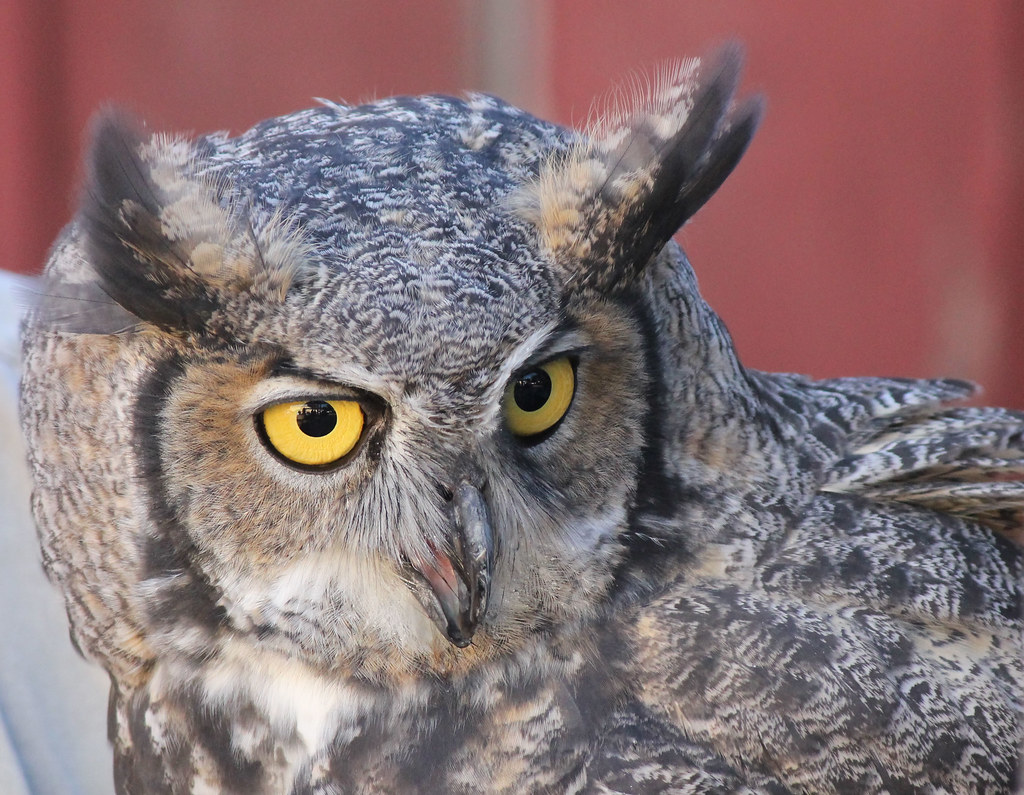
Whooo-Ku Haiku: A Great Horned Owl Story

 |
| (Photo from Creative Commons) |
Told in three lines of 5, 7, and 5 syllables, haiku is an ancient and popular form for nature poetry. Gianferrari's story is lyrically told and packs in a lot of information in these sparse lines. The tale is so well told that most young readers probably won't even realize it is poetry. Some words will need defining (ex. Mama mantles is used to mean the spreading of wings and tail to cover something) but overall this will be very readable and understandable by most 2-6 graders.
Back matter provides more information on Great Horned Owls, including their big eyes, their weight and wingspan, and what they eat. References are made to excellent websites, including "Owl Pages," a great site that provides information on owls of the world and provides sound files to hear the owls.
 |
| Interior page |
Dreamy illustrations by Jonathan Voss were created using sepia ink and watercolors and provide clear representations of the owls' cycle of life, habitat, and habits.
Like most owls, Great Horned Owls are primarily nocturnal so we have to listen for them after dark. They usually begin hunting at dusk, so if you are lucky you may catch sight of this swift bird looking for food to bring back to a nest. Look also on fence posts and tree limbs on the edges of open areas. Unlike many birds, Great Horned Owls nest during the winter, so look high in trees like cottonwoods for birds incubating eggs. One way to encourage owls to stick around in your neighborhood is to build owl houses for them to nest in. These can be purchased but simple plans are also available on the Internet.
PRIZE: WHOOO? YOUU! The publisher, who provided an advanced copy of the book to me for review, will give away a copy to a US resident. Leave a comment here or email your information to Maria through her website, by March 21 to be entered in a drawing. One winner will be selected.

FTC Disclosure: I received a complimentary review copy from the publisher. I receive no compensation for reviewing the book.
Wednesday, February 12, 2020
Let's Discover Birds

Most of the birds, like geese, robins, and pigeons, will be fairly easy for kids to spot around their homes or in parks. Some, like puffins and kittiwakes will require a trip to an aquarium or specific areas of North America. The illustrations of the birds are realistic and clear with general identifications markings.
 This book is part of a spin-off series from an animated film, the illustrated characters are those from Helen Oxenbury's book, Let's Go on a Bear Hunt, but the family sets out to discover birds instead of bears. Other than the human characters, I'm not sure why this is a "We're Going on a Bear Hunt" book as the text doesn't follow the pattern of that fun action activity, but Let's Discover Birds will get the kids out of the house and looking for birds. Because this is an activity book with stickers and is designed for kids to write and color in, it won't be found in many libraries. Consider it as a gift for a budding birder.
FTC Disclosure: I received a complimentary review copy from the publisher. I receive no compensation for reviewing the book.
Monday, January 27, 2020
Audubon Makes Prints Free to Download
 |
| Cedar Bird (Audubon Society) |
 |
| American Avocet (Audubon Society) |
Monday, December 16, 2019
Crows Could be the Smartest Animals Other than Primates
 |
| American Crow |
Since we moved back to Central Texas I've been seeing a lot more crows. The American Crow is the "default" crow for most of North America and is closely related to Ravens (which are moving into new territories including Central Texas). There are about 40 species of crows and they are found all around the world.
 |
| Pied Crow, Tanzania |
Crows Could be the Smartest Animals Other than Primates
Wednesday, July 3, 2019
Birds of Every Color

Oversized photos are glorious and illustrate the birds in their natural habitats. Written for two reading levels, each page has short sentences ("Brown colors help birds hide.") for younger readers but also more detailed information about the bird, its colors, and habitat in longer paragraphs that will appeal to older readers. A final double-page spread invites readers to identify the colors seen in an array of multicolored birds. The book ends with a glossary of "Colorful Words."
 |
| (Photo by J. Larson) |
It would be easy to quibble about birds that were not included. Some of my favorite, like the Painted Bunting, appear to have every color. However, what is clear is that Collard has covered a wide range of birds in all their dazzling glory very well. And readers will be on the lookout for even more!
FTC Disclosure: I received a complimentary review copy from the publisher. I receive no compensation for reviewing the book.
Wednesday, June 5, 2019
Crane & Crane

In Crane & Crane, Linda Joy Singleton compares the construction crane with the sandhill crane. She very simply, yet clearly, conveys a number of concepts that compare the object with a living thing. This allows her to show more than just the similarities, also visually demonstrating how nature inspires technology and how mechanical things can mirror the natural word.
Using double page spreads to show both a living crane and a construction crane, Singleton encourages readers to view these similarities as a sandhill crane lifts, stretches, honks, grabs, glides, and more. On the facing page a construction crane is performing the same actions and making the same sounds. By the end of the book readers discover that while the construction crane was building a house, the bird was building a nest. A final page labels parts of both cranes.

In addition to showing young readers how both cranes operate, the book teaches verbs. Only the final word, "home," is a noun. Children will enjoy looking at the details and can be encouraged to repeat and act out some of the words, especially onomatopoeic words like "plop" and "swoosh." Watercolor and crayon illustrations by Richard Smythe are bright and light and the pictures add a lot of details to support the single words on each page.
 |
| Sandhill Cranes, Bosque Redondo, NM |
FTC Disclosure: I received a free copy of this book from the author but receive no compensation for the review.
Monday, May 13, 2019
Sounds of Nature: World of Birds


FTC Disclosure: I received a free copy of this book from the author but receive no compensation for the review.
Subscribe to:
Posts (Atom)