 |
Parents creating nest
Photo by Jeanette Larson |
In the past couple of years, I've seen skimmers pretty regularly during out visits to Rockport but this is the first year I've been able to actually watch their full cycle of life. Just before Memorial Day the birds started to gather and make nests on Rockport Beach.
 |
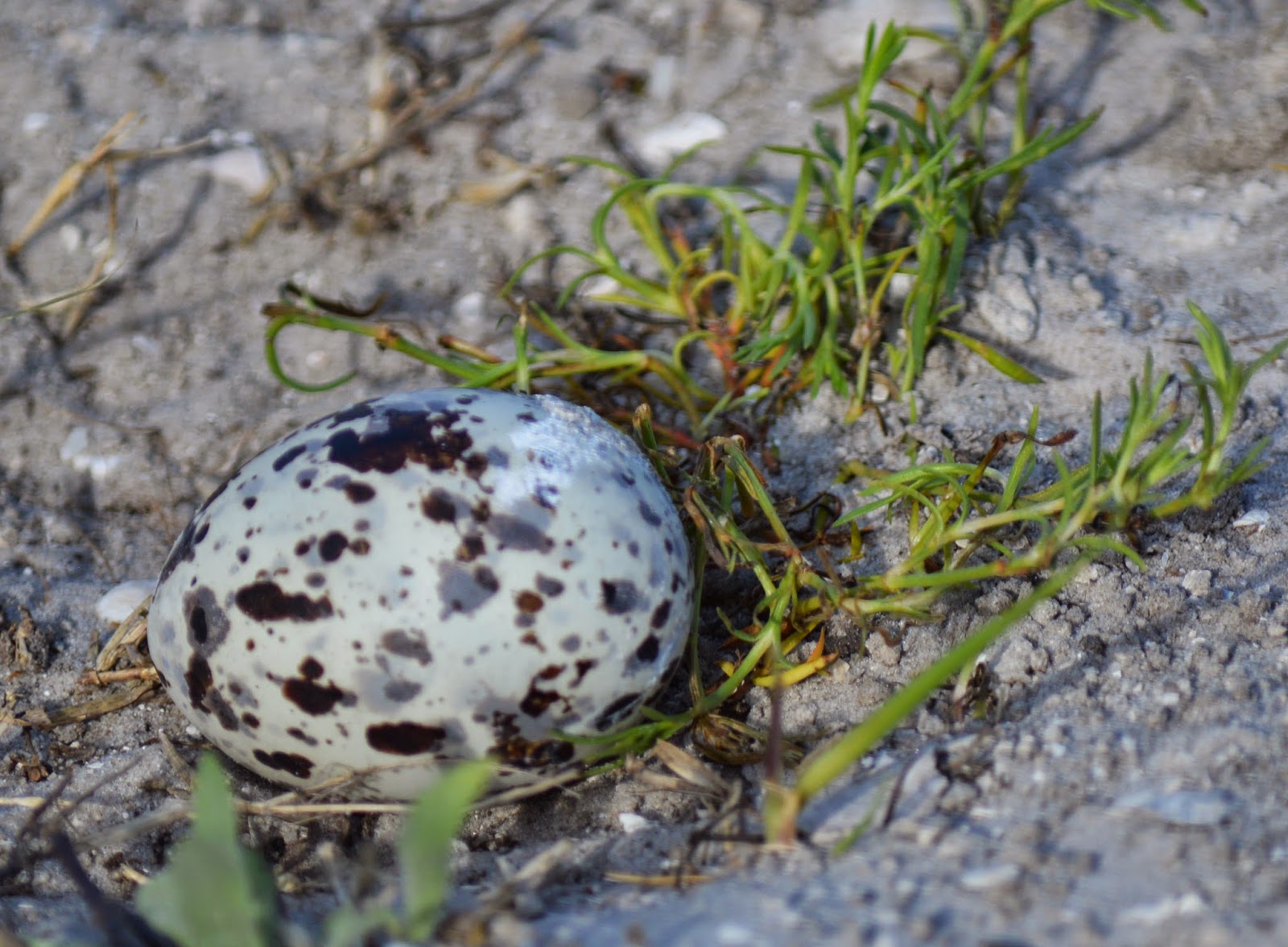
Skimmer egg
Photo by Jeanette Larson |
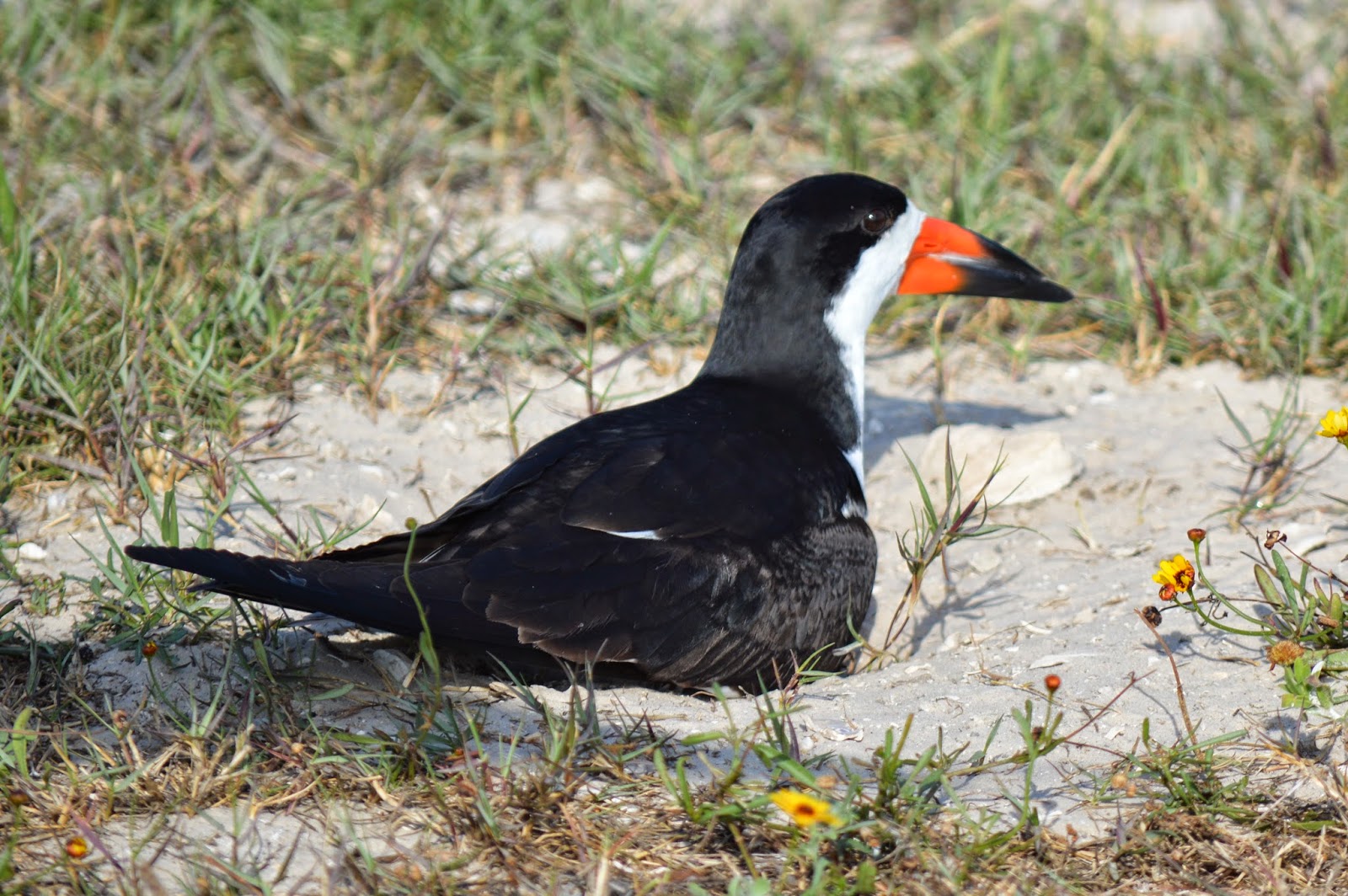
Skimmers are monogamous and the mates each take turns scraping away a place in the dirt and rotating in the sand to create a saucer-shaped depression. They are colonial birds so many nests are close together and they will nest near the gulls that are also preparing for their eggs. It can take up to about a week for the female to lay 3-5 eggs. The eggs can be tough to spot because both parents incubate and they are flush with the ground sitting on the depression. You have to be patient and watch for a chance to see them when whichever bird is sitting moves, turns around, or changes out with the other. The eggs are very vulnerable and gulls will take any opportunity to swoop in and steal an egg to eat.
 |
Skimmer chick (note beak)
Photo by Jeanette Larson |
The skimmers are very protective and aggressively mob intruders to keep them away from the nest and to protect the female. I have noticed that if I stay in the car to watch the birds and take photographs they don't seem to mind. But if I get out of the car they will swoop down as if planning to attack. Human disturbance is detrimental to the eggs and the newborn chicks so I stay in the car. Rockport Beach actually closes access to the nesting area around July 1 to deter people from getting too close.
.JPG) |
Growing up
Photo by Jeanette Larson |
Like clockwork, after about 21 days the babies hatch. Although I can't be positive, it looks like most nests end up with two chicks hatching. They continue to be cared for by both parents for another 3 to 4 weeks. The most distinctive feature on Black Skimmers is their mandible. Orange and black, the lower part of the bill is longer than the upper, allowing the bird to skim the water for food. Babies are born with beaks of equal length. Within a few weeks you can see the lower mandible start to lengthen and change colors.
 |
Photo by Cheryl Vance-Kiser
Used with Permission |
As the chicks fledge, the colony moves closer to the water. By the end of July, the chicks are almost full grown, their colors are changing and they are testing their wings. The chicks are also learning to fish for themselves. Parents will still feed them if needed and sometimes the chicks literally fall flat on their faces after the strenuous experience.
 |
Winging it
Photo by Jeanette Larson |
The experts say this was a pretty good year for skimmers with many chicks hatching. Black skimmers were once hunted nearly to extinction but are now categorized as "least concern" on the
IUCN Red List of Threatened Species but some years are better than others for the colonies. Once a colony is established the skimmers return year after year. While they breed in many areas along the Atlantic coast, they are on the Texas coast year-round. So I'm looking forward to watching the cycle again next year.

Other interesting things about the black skimmer: their legs are short with webbed feet. While they will wade into the water they don't swim or dive. They skim along the surface with the upper mandible held above the water. Their eyes, which in adults disappear into the black coloring, constrict to a narrow vertical slit. They are they only birds with this trait, which may be an adaptation against the bright glare of water and sand.
Literary tie-ins: In
Minn of the Mississippi by Holling C. Holling, Minn, a turtle observes skimmers along with many other birds on a trip down the Mississippi.

This classic by the author/illustrator of
Paddle to the Sea and
Seabird received a Newbery Honor award in 1952 and is a wonderful introduction to the ecology of the Mississippi for readers of any age.



.JPG)
