It's nesting season and we are getting a lot of baby birds in Rockport. Birds Make Nests by Michael Garland provides a quick look at the various types of nests birds build for their eggs and nestlings. Each page is filled with magnificent woodcuts depicting a variety of birds from the pileated woodpecker on the cover to the red-tailed hawk on the back jacket. For some birds both male and females are shown. Whether shaped like cups (hummingbird), on the ground (ostrich), or hanging from a tree (Baltimore oriole) the nests protect eggs and babies. Common names are provided on each page. One of the final scenes has a group of children watching an American Robin feeding three chicks. The book will have children and adults looking to see what nests they might find, as well as watching for the young birds to leave the nest. As an added feature, a teaching guide for the book is available online.
Baby American Coot (Port Aransas, TX)
The only thing I think is missing is an afterward with information on what to do if you find a baby bird out of the nest. If kids go out looking for nests they may stumble on birds in need of help--or not. Often the parents are nearby and no intervention is needed. If you are sure that the bird has been abandoned, qualified rehabiltators can raise the baby bird until it fledges and can survive on its own.
Young grackle ready for release (Rockport, TX)
Baby Cardinal being raised by a rehabiltator (Rockport, TX)
I haven't blogged in almost two months but I think I had a good reason. Jim and I decided to move permanently to the house in Rockport so I've been cleaning the "nest" in Pflugerville, packing up stuff, and getting the house sold. I hadn't really thought of our life changes in bird terms until my dear friend Michael J. Rosen, author of The Cuckoo's Haiku: and Other Birding Poems, sent a haiku and a photograph of a hummingbird's nest to me as a moving gift. So yes, I guess we were abandoning our old nest and "building" a new one.
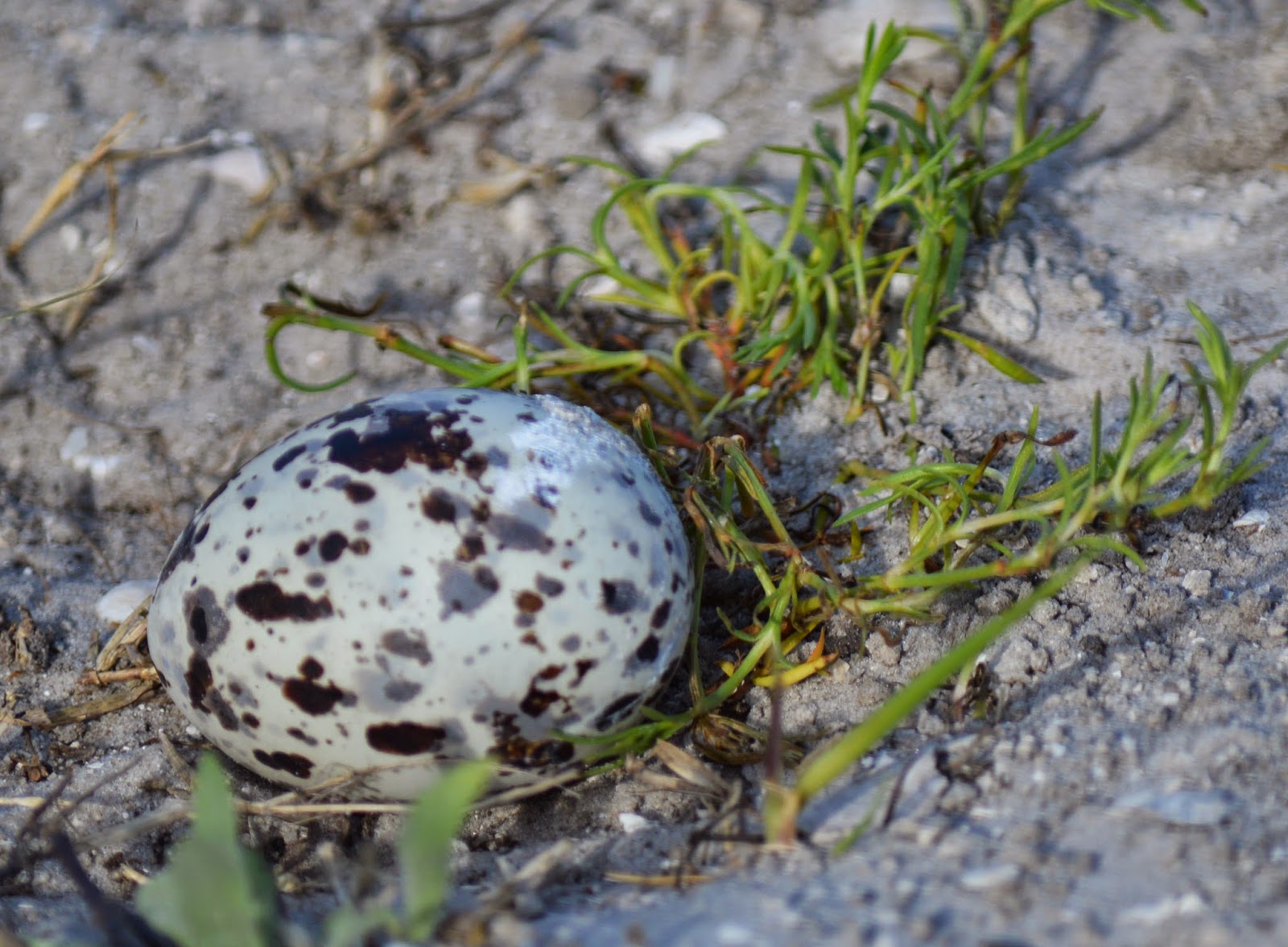
Black Skimmer Egg
It's a great time to be moving to Rockport as it is nesting season on the coast and it's fascinating to watch the birds mating, nesting, and raising their young. The gulls and skimmers are nesting on Rockport Beach. The nests are scraped into the dirt and sand in several protected areas. It's quite a challenge to spot the eggs and the parents are very protective. Although I've yet to actually see a chick hatch, I am starting to see them fledge and the chicks are adorable.
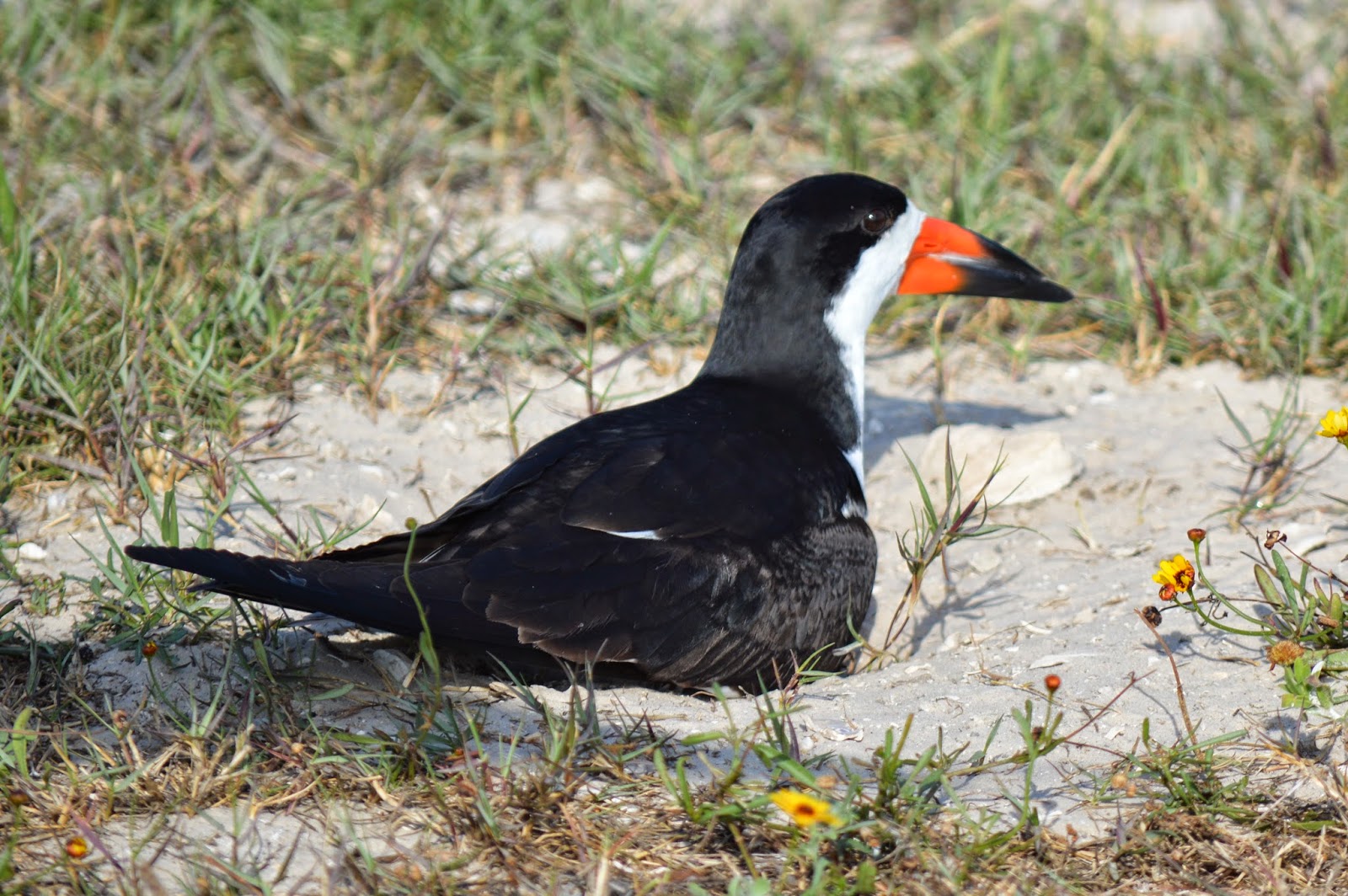
Black Skimmer nesting
Skimmer chicks
Black skimmers have distinctive red and black bills that look a bit like candy corn to me (or I guess more accurately what is called autumn mix since those are black, orange, and white). The lower mandible is longer than the upper, allowing the bird to drag its mouth through the water skimming up small fish. There may be as many as four eggs in a clutch. At birth the mandibles are the same length (look closely at the chicks), but start to show differences by four weeks. The parents feed the chicks until they are about four weeks old and can skim their own food. This is the only American skimmer; the other two species are African and Indian. Although the skimmers are migratory they stay in Rockport year-round.
Laughing Gull Chicks
The laughing gulls are very abundant but I never tire of watching them. Rarely do I go out to take photographs without getting a few of the gulls doing silly things. They always look so clean and graceful!
Laughing gull
The laughing gulls nests will often be mixed in areas with or near the skimmers. The gulls are monogamous, often staying together through several breeding seasons. Each clutch may have one to four eggs. Both male and female gulls incubate the eggs for about 30 days.The gull chicks will go through several molts, changing from light brown feathers to the more familiar white head and gray back.
It appears that some of the gulls stand guard around the edges of the
protected nesting area to warn of intruders. I find this kind of ironic as laughing gulls sometimes sneak up and steal skimmer eggs. We joke that every post has a gull because they do seem to love standing on the signs and posts around the nesting area.
After the egg hatches, gulls clean out their nests to prevent shell pieces from attaching to other eggs, preventing hatching. Seems like we all need to clean house and build a new nest once in awhile!
 It's nesting season and we are getting a lot of baby birds in Rockport. Birds Make Nests by Michael Garland provides a quick look at the various types of nests birds build for their eggs and nestlings. Each page is filled with magnificent woodcuts depicting a variety of birds from the pileated woodpecker on the cover to the red-tailed hawk on the back jacket. For some birds both male and females are shown. Whether shaped like cups (hummingbird), on the ground (ostrich), or hanging from a tree (Baltimore oriole) the nests protect eggs and babies. Common names are provided on each page. One of the final scenes has a group of children watching an American Robin feeding three chicks. The book will have children and adults looking to see what nests they might find, as well as watching for the young birds to leave the nest. As an added feature, a teaching guide for the book is available online.



.JPG)
